Learn the safe and correct way to remove and replace unhealthy fascia boards with the correct approaches and tools. Fascia boards have an important job – they support your gutters and protect your roof.
It’s best not to leave damage unaddressed. Taking action quickly will help you avoid more serious damage! As our approach at Big Easy Roof Team, we will assess the level of damage, carefully take down the old boards, and replace them with sturdy new boards to ensure they last.
Key Takeaways
Safety-first measures are essential when preparing to replace your fascia boards, including the use of stable ladders, protective equipment, and having an assistant on standby. Be sure to consult local building codes and remove all debris and obstacles from the work area before beginning.
Key tools involved would be a drill, saw, level, screws, nails, caulk and paint. These tools guarantee accurate cutting, snug-fitting installation, and a long-lasting appearance.
Consider materials. Consider using wood, vinyl, or aluminum materials that require lower maintenance, are more durable, and resist the effects of severe weather. Tip: Select replacement boards that complement your home’s architectural style for a seamless appearance.
It’s important to get your measurements accurate, remove old boards carefully, and inspect rafters for damage, as all of these are key in a successful replacement. Remove as much hidden damage as possible before installation.
Depending on your specific weather conditions, this can be a big factor. Plan to do work on dry days, and choose materials that will better withstand climate-related stresses.
Routine maintenance—like regularly cleaning your gutters and checking boards for signs of deterioration—will only make fascia boards last longer. Better to take care of small problems now than pay for expensive renovations down the road.
Groundwork
Proper preparation before taking down or replacing a fascia board is vital to having a successful and safe project. This is the planning phase, ensuring safety measures are taken and documenting preparatory steps to lay a strong groundwork for the work ahead. Failure to do so can lead to perilous and costly mistakes.
Safety First
Always use heavy-duty ladders, safety harnesses, or a combination thereof whenever you work at heights. Using ladders that are unstable or not using safety harnesses can easily lead to falls. It is also important to wear gloves and goggles to prevent injuries from sharp edges and falling debris.
Be conscious of overhead power lines and slippery surfaces. You will need to pay extra attention to electrical hazards and any structures that are not sound. Having a second person on site will help with safety when you need to stabilize a ladder or pass tools.
Tool Kit
Claw Hammer: For removing old nails and boards.
Drill and Screwdriver: For secure installation of new fascia.
Measuring Tape and Level: For precise measurements and alignment.
Saw: For cutting boards to size.
Caulk, Nails, Screws, Paint: To seal gaps and finish the look. Each tool supports achieving a durable, professional finish.
Material Choice
Common materials include wood, vinyl, and aluminum. Wood offers classic beauty but needs regular maintenance. Vinyl is low-maintenance and weather-resistant, while aluminum is highly durable. Choose materials that resist moisture and match the property’s character.
Area Preparation
Clear the work area of debris and obstacles. Remove old gutters and inspect the roofline for hidden damage. Use tarps to protect nearby structures and document any pre-existing damage to ensure accurate replacements.
Code Awareness
Check local building codes to ensure compliance. Using inadequate materials or methods can lead to safety issues or structural defects. Ignoring regulations may result in fines or an unsatisfactory final product.
Replacement Guide
Replacing damaged wood fascia boards requires careful planning and attention to detail. Getting to know the things you need to do and prepare can help a lot in getting a successful result.
Gutter Removal
Before starting, remove the gutters by unscrewing or unclipping them gently to avoid bending brackets or the fascia. Label and keep the pieces organized for easy reinstallation. Check for rust or debris, and clean them if they’re reusable.
Old Fascia Removal
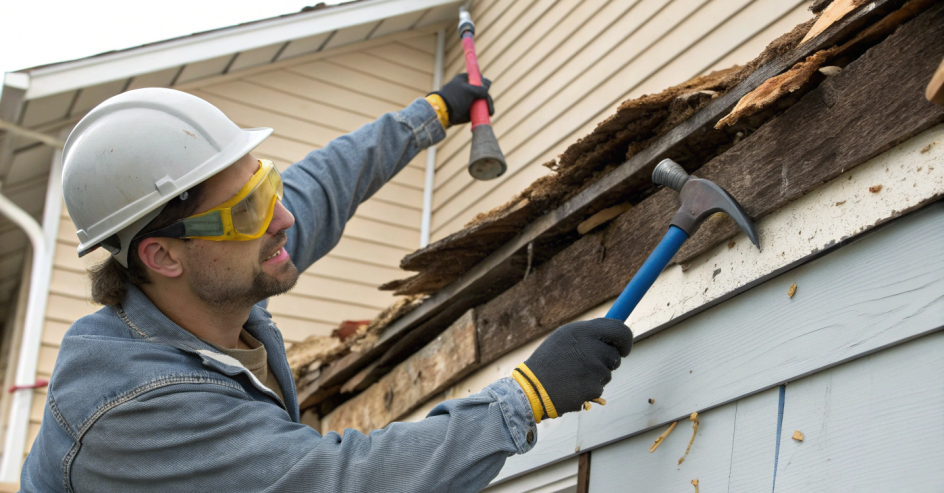
Use a pry bar to carefully take out the damaged fascia boards without harming the roof rafters. Look for hidden damage like rot or pests, and address any repairs needed before proceeding. Dispose of old boards to keep the workspace tidy.
Rafter Inspection
Check the roof rafters for structural integrity, especially for rot or water damage at the ends. Reinforce or replace any weakened rafters to support the new fascia properly.
Precise Measurements
Accurate measurements are crucial for cutting replacement boards. Use a measuring tape and level, double-checking dimensions to avoid costly mistakes.
Cutting New Boards
Cut the new fascia boards to size with a circular or miter saw for clean edges. Smooth rough cuts with a file and label the boards for easy installation.
Secure Installation
Align the boards with the roofline and attach them using screws or nails. Use a level to ensure proper alignment, and fasten joints securely to prevent movement.
Finishing Touches
Apply weather-resistant paint or sealant to protect the boards. Seal all seams and edges to prevent water infiltration, and reattach the drip edge and gutters to complete the replacement.
Expert Insights
Safe fascia board replacement requires careful planning, the right materials, and attention to climate. Here are the essential elements for a successful project.
Material Choices
Choosing a material impacts durability, maintenance, and cost. Here is a comparison of the materials that you’ll commonly find available:
Wood: Affordable and paintable, but highly susceptible to rot.
PVC: Pricey and not environmentally friendly, but low maintenance and waterproof.
Aluminum: Very durable and weather resistant, which provides some limitations on color durability (it can dent!), but still a decent choice.
Composite: Expensive and not readily available, but will last a long time and will sound sustainable.
When working in humid environments such as New Orleans, you should opt for low moisture-retaining materials such as PVC or aluminum because while wood will be affordable, it does not perform very well in wet and humid areas.
Hidden Risks
Believing that inspecting behind fascia boards for concerns such as rotten wall studs or inadequate insulation will avoid levels of replacement complications. Also, if you turn a blind eye to damaged wood, you could be in for a large and expensive structural fix. By inspecting your underside’s hidden issues at the beginning, the potential for an endless lifespan installation is assured.
Aesthetic Matching
Using profile-matched fascia boards enhances your home’s curb appeal. Matching colors, finishes, and trim details can elevate the overall look. Custom options are great for unique architectural styles.
Keep Your Fascia Board In Good Condition By Letting Us Work On It
Fascia boards are important protection for your roof and home. Replacing damaged fascia boards as soon as possible will reduce the need for more extensive repairs in the future. If you have the correct tools, the necessary preparation, and some patience, you can do this job with confidence.
Every time you correctly seal the gaps, make accurate cuts, and securely fasten boards, you will contribute to the longevity and aesthetic of your home. If you have questions or would like to talk to a professional, we would love to give you an inspection or a free quote; your home surely won’t regret it! Contact us at Big Easy Roof Team.
In the vibrant city of New Orleans, roof replacement is often a necessary aspect of home maintenance due to the region's unique climate conditions. The city's subtropical climate, characterized by ...
The city of New Orleans, known for its vibrant culture and rich history, also contends with a unique climate that poses various challenges to homeowners. Among these challenges is the need to selec...
When it comes to commercial properties, the roof isn't just a protective covering; it's a crucial element that contributes to the building's functionality, energy efficiency, and aesthetic appeal. ...
A roofing inspection is a detailed assessment of the roof's condition. This process involves a thorough examination of all aspects of the roof, including the shingles, flashing, gutters, downspouts...
When it comes to planning a roof replacement project, the initial steps are crucial to ensuring a smooth and successful outcome.
The very first step is to assess the current roof's condition. ...
Why Regular Maintenance is Key for the Longevity of Your New Orleans Roof
New Orleans is known for its humid, subtropical climate that brings a lot of rain and wind throughout the year. This type ...


 Big Easy Roof Team
 Oct 9, 2025
  Proper preparation before taking down or replacing a fascia board is vital to having a successful and safe project. This is the planning phase, ensuring safety measures are taken and documenting preparatory steps to lay a strong groundwork for the work ahead. Failure to do so can lead to perilous and costly mistakes.
  Before starting, remove the gutters by unscrewing or unclipping them gently to avoid bending brackets or the fascia. Label and keep the pieces organized for easy reinstallation. Check for rust or debris, and clean them if they’re reusable.
 Choosing a material impacts durability, maintenance, and cost. Here is a comparison of the materials that you’ll commonly find available:
 Big Easy Roof Team


